Showing posts with label Urban Survival. Show all posts

Wednesday, September 5, 2012


Everyday Preps

August 24, 2012
By Eric Peters
When people talk about “preps” they’re usually talking about things like ammunition and food – both of which, obviously, are good things to keep handy in the event the SHTF. But, it’ll also be good to keep your teeth – otherwise you’ll have trouble eating that food – and the ammunition you use to down those deer won’t do you much good without a blender.
And a straw.
Not only that. An abscess can be just as lethal (only slower and more painful) than a gunshot wound. There is strong scientific evidence that a correlation exists between tooth decay/bacteria in one’s mouth and other, more serious ailments. Dentists will not be easy to find in a SHTF scenario, so avoiding – or at least, putting off – the need to find one in a SHTF scenario is arguably just as important as having sufficient food and ammo.
So, buy toothpaste.
And floss. And extra toothbrushes.
Figure one tube for a month, two packs of floss for a month and one new toothbrush every six months. Get enough for a year ahead at least. All this stuff keeps effectively indefinitely, so there’s no downside to stocking up. Worst case – best case, actually – you have pre-bought items that are certain to get more costly in the months and years ahead, even if the S does not H the F. And unlike MREs – which you may never eat if the S doesn’t H the F – you will use that toothpaste, floss and spare brushes.
What else?
Of course, there’s TP. Don’t forget TP, whatever you do. Sanitation is absolutely crucial to surviving, long-term (and even short-term) in a SHTF scenario. Corn cobs won’t cut it. There’s a reason why the average person died in his 40s in the 18th century: Filth. Which leads to disease. Which leads to – death. TP will help keep things clean – which will help keep you and yours alive – as well as comfortable. Like toothpaste and floss, TP also has the virtue of being imperishable. There’s no harm in stocking up. And potentially, much to be gained.
Related: It’s smart to think about what you might do if the plumbing stops working – because city water’s off (or you can’t run your well pump regularly). If you live in a rural area or at least have some backyard, a “necessary” – as Thomas Jefferson called them – will be something to consider. You absolutely do not want to you-know-what where you live.
Next item:
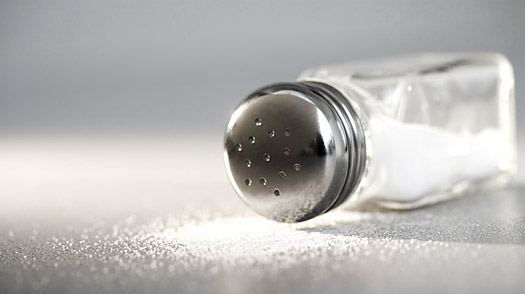
Salt – iodized salt – is another item we often don’t think much about but which is essential to maintaining health. Iodine deficiency correlates with mental retardation in children and thyroid problems in adults – especially goitre, a hideous (and painful) swelling of the voice box. It is reported that 90 percent of all goitre cases result from iodine deficiency. Goitre is relatively rare in the U.S. and other developed countries, where iodized table salt is part of the everyday diet. But in a SHTF scenario, the everyday table salt we take for granted may no longer be granted. Salt is one of those things most people can’t make for themselves; iodized salt even less so. Most houses – including prepper houses – have a small supply of this essential item. If that’s you, rectify the omission. Buy enough salt to keep you seasoned – and healthy – for at least a year. You can buy a 25 lb. bulk bag for about $13 at Sam’s and other big box stores. Don’t forget that in addition to preserving you, salt can also be used to preservemeat without refrigeration – another excellent reason to have plenty on hand for just-in-case.
Lighters.
How will you make fire in a SHTF situation? Matches get wet – and you need a lot of them to equal the fire-starting capability of just one Bic lighter. Buy several “value packs” of 4-6 (or more) lighters at a time and store them. These packs are cheap – I recently bought  a five pack at Wal-Mart for less than $2.
Lights.
It’s a good idea to keep spares on hand. You may have a generator; you may have a solar array. But what good is power if you’ve got no fresh bulbs when the old ones burn out? Incandescents are still dirt cheap, too. You can buy a large quantity for next-to-nothing.
Pet supplies.
Most healthy dogs and cats can – in a pinch – eat whatever you eat. But what about special needs pets? It’s a good idea to have a few months’ (at least) supply of special diet food for your four-pawed friends. If you have indoor-only cats, stocking up on cat litter should be on your To-Do list, too.
Extra glasses – if you wear ‘em.
Remember that prepper rule? The one that says two is one – and one is none? If you depend on glasses to see clearly, it is imperative to have at least one extra pair on stand-by; ideally two. Glasses get lost – or stepped on. Or just scratched. What happens if you can’t see very well when the SHTF and you can’t go down to the optometrist for a refill? Exactly.
Ditto any medicines you may need – such as allergy pills or other over-the-counter stuff . Get extra. While you still can.

You Need More Than Ammo and Food


When people talk about “preps” they’re usually talking about things like ammunition and food – both of which, obviously, are good things to keep handy in the event the SHTF. But, it’ll also be good to keep your teeth – otherwise you’ll have trouble eating that food – and the ammunition you use to down those deer won’t do you much good without a blender.
And a straw.
Not only that. An abscess can be just as lethal (only slower and more painful) than a gunshot wound. There is strong scientific evidence that a correlation exists between tooth decay/bacteria in one’s mouth and other, more serious ailments. Dentists will not be easy to find in a SHTF scenario, so avoiding – or at least, putting off – the need to find one in a SHTF scenario is arguably just as important as having sufficient food and ammo.
So, buy toothpaste.
And floss. And extra toothbrushes.
Figure one tube for a month, two packs of floss for a month and one new toothbrush every six months. Get enough for a year ahead at least. All this stuff keeps effectively indefinitely, so there’s no downside to stocking up. Worst case – best case, actually – you have pre-bought items that are certain to get more costly in the months and years ahead, even if the S does not H the F. And unlike MREs – which you may never eat if the S doesn’t H the F – you will use that toothpaste, floss and spare brushes.
What else?
Of course, there’s TP. Don’t forget TP, whatever you do. Sanitation is absolutely crucial to surviving, long-term (and even short-term) in a SHTF scenario. Corn cobs won’t cut it. There’s a reason why the average person died in his 40s in the 18th century: Filth. Which leads to disease. Which leads to – death. TP will help keep things clean – which will help keep you and yours alive – as well as comfortable. Like toothpaste and floss, TP also has the virtue of being imperishable. There’s no harm in stocking up. And potentially, much to be gained.
Related: It’s smart to think about what you might do if the plumbing stops working – because city water’s off (or you can’t run your well pump regularly). If you live in a rural area or at least have some backyard, a “necessary” – as Thomas Jefferson called them – will be something to consider. You absolutely do not want to you-know-what where you live.

Sunday, July 22, 2012

Stranded in Bolivia: Kettlebell Training for Survival Fitness


Nico Rithner used kettlebell training to help him build strength to survive in Bolivia.
When I think of survival, I think of a shortage of everything, including the basic essentials like food, medicine, and appropriate shelter. When I was 18, I had a small adventure which included these shortages. I was stranded in Bolivia, just me with only a tourist visa and without any skills, money, or friends. During those 13 months of “personal development,” I learned a few things about survival, and how to live day-to-day. I now realize that my struggle in Bolivia was “my coming of age” and helped me develop into the man I am today.
I arrived in Santa Cruz, Bolivia with very little money and no job. Soon after failing at getting a job, I ended up homeless and completely broke. All I had was a small backpack with one change of clothes and one jean jacket. To make matters worse, my visa didn’t allow me to take a real job and I had very limited choices. I was put to the test and I found ways to survive. I travelled on the roof of a train, I stowed away on a banana truck, I fought off robbers, and I ran for hours every day in exchange for a plate of food. I climbed a tall fence daily to avoid security guards so that I could get to my sleeping spot each night.
Things got better over time. I survived hunger, homelessness, thieves, and other challenges. After over a year of struggle, I ended up making my way back home. When I got back to my family in Patagonia, I was a different person. I was tougher both physically and mentally and I was heavier and stronger. I felt more confident than I ever had in who I was and the man I was becoming.

Stranded In Bolivia: Situational Briefing & Workout Planning

Location: South East Bolivia. City of Santa Cruz.
Climate: Subtropical jungle.
Conditions: Urban environment. 3rd world city.
Employment: Access to very low-paying, physical jobs, enough to trade for shelter and food. Little rest due to poor quality of shelter and very limited food supply.
Threats: Illnesses, robbers, narcs. A Caucasian appearance gets unwanted attention, fighting and escaping required.
Fitness Level: Good cardio foundation and average levels of strength. Before arriving in Bolivia, I had been training consistently with a local swim team for five years. I was training a few hours each day, six times a week. Swimming and cross training was the extent of my fitness.
The Program: When surviving in Bolivia, I learned that while being fit was very important, avoiding getting sick or injured was equally vital to survival. These workouts put emphasis on overall strength and endurance, overloading very conservatively to avoid over training and injury. Down in Bolivia, I didn’t have kettlebells or any equipment for that matter, and I used only calisthenics to maintain body strength.
Equipment: Timer, two kettlebells of equal weight, 18-24 inch stable platform, pull up bar or tree branch
Workout Schedule: Allot only two days a week to kettlebell lifting and the rest to light cardio and 30 minutes of joint mobility and stretching, or simply joint mobility and stretching.

Kettlebell Dive Bomber

Nico Rithner kettlebell dive bomber

Kettlebell Windshield Wiper

Nico Rither kettlebell windshield wiper

Kettlebell Power Snatch

Nico Rithner kettlebell power snatch

Stranded In Bolivia: Kettlebell Workout #1

WARM UPGeneral Warm Up: Joint Rotation/Dynamic Stretch
Warm Up for Snatch:
A: Alternating 1-Hand Swing - 1 x 2 min
B: Clean - 1 x 2 min per side
C: Double Clean - 1 x 1 min
WORKOUT
A1:
 Single Half Snatch - 2 x 10 per side
A2: Rope Skipping (Shuffling Feet) - 2 x 1 min
A3: Double Half Snatch. - 2 x 10
A4: Rope Skipping (High Knees) - 2 x 1 min
A5: Single Half Snatch - 2 x 10 per side
A6: Rope Skipping (Feet Together) - 2 x 30 sec
A7: Double Half Snatch - 2 x 10
A8: Rope Skipping (Double unders) - 2 x 30 sec
B1: Shoulder Bridge Chest Press - 3 x 20
B2: Rope Skipping (Sprint) - 3 x 30 sec
B3: Double Bent Row - 3 x 20
B4: Rope Skipping (Easy) - 3 x 1 min
COOL DOWN
A:
 Windmill Series - 1 x 10 min
B: Stretching - 1 x 20 min

Stranded In Bolivia: Kettlebell Workout #2

WARM UPGeneral Warm Up: Joint Rotation/Dynamic Stretch
Warm up for Power Snatch:
A: Muscle Snatch - 1 x 1 min
B: Hang Power Snatch - 1 x 1 min
C: Power Pull - 1 x 1 min
WORKOUT
A1:
 Double Power Snatch - 2 x 10
A2: Rotational Sit Up - 2 x 10 each direction
A3: Double Power Snatch + 3 Push Ups - 2 x 10
A4: Reverse Hypers - 2 x 1 min
A5: Double Power Snatch + 3 Dive Bombers - 2 x 10
A6: Side Bends - 2 x 1 min per side
B1: Lateral Step Ups (Kettlebell on back) - 2 x 2 min
B2: Pull Ups (Use different variations) - 2 x 1 min
B3: Decline Push Ups - 2 x 1 min
B4: 2-Foot Box Hops (Backwards/Forwards) - 2 x 2 min
B5: Pull Ups (Use different variations) - 2 x 1 min
C: 1-Leg Orbitals - 1 x 1 min
D: 1-Leg Jerk - 1 x 1 min
E: Shoulder Bridge “I” - 1 x 1 min
F: Shoulder bridge “T” - 1 x 1 min
COOL DOWN
A:
 Get Up Series - 1 x 10 min
B: Stretching - 1 x 20 min